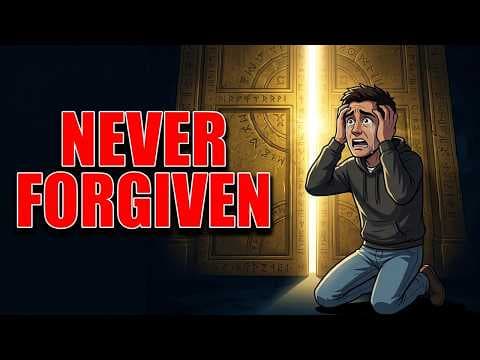
5 "Silent" Sins That Are Blocking Your Prayers
You pray, but heaven feels silent. Scripture teaches that certain sins — quiet, respectable, easy to hide — can actually hinder your prayers. Here are 5 silent sins the Bible names, and how to remove each one so your prayer life comes back to life.
You pray — sincerely, regularly, sometimes desperately. And yet it feels like your words hit the ceiling and fall back down. Before you conclude that God is distant or prayer doesn't work, the Bible asks you to consider a harder possibility: something on your side of the line may be blocking the connection.
The short answer: yes, Scripture explicitly teaches that certain sins hinder prayer. Not because God's power fails, but because God ties the effectiveness of our prayers to the condition of our hearts:
"Behold, the LORD's hand is not shortened, that it cannot save; nor His ear heavy, that it cannot hear. But your iniquities have separated you from your God; and your sins have hidden His face from you, so that He will not hear." — Isaiah 59:1–2
The dangerous sins here are rarely the loud, obvious ones. They are the silent ones — respectable, invisible, easy to live with for years. Here are five that Scripture names directly, and how to deal with each one today.
Does God Really Refuse to Hear Some Prayers?
Let's establish the principle first, because it makes many believers uncomfortable. David — the great psalmist of prayer — wrote:
"If I regard iniquity in my heart, the Lord will not hear." — Psalm 66:18
Notice the wording: not commit iniquity (every believer sins), but regard it — to look at a sin, know it is there, and keep it anyway, cherished and protected. God does not demand perfection before He listens; He is a Father who delights in His children's voices. But He is also a Father who will not pretend everything is fine when His child is hiding something behind his back. With that principle in place, here are the five silent blockers.
Prefer to watch? This study is also available as a video:
Silent Sin #1: Unforgiveness You've Learned to Live With
This is the blocker Jesus warned about most directly — and He attached it to prayer itself:
"And whenever you stand praying, if you have anything against anyone, forgive him, that your Father in heaven may also forgive you your trespasses." — Mark 11:25
Unforgiveness is the perfect silent sin: it feels justified (they really did hurt you), it shows no outward symptoms, and it can sit in a heart for decades disguised as a healed wound. But Jesus is unambiguous — a heart clenched shut toward a person cannot be open toward God (Matthew 6:15).
Forgiving is not saying the offense didn't matter; it is handing the case over to the righteous Judge (Romans 12:19). Name the person before God today, release them, and watch what it does to your prayers.
Silent Sin #2: The Sin You've Renamed and Protected
Every believer battles sin — and as we showed in our study on the believer's struggle, the battle itself is healthy evidence of life. The blocker is different: it is the sin you have stopped fighting and started managing. The "harmless" habit. The compromise you renamed — not gossip but "sharing," not lust but "just looking," not greed but "ambition."
That is precisely what David meant by regarding iniquity in my heart (Psalm 66:18). And Solomon states the consequence with frightening precision:
"He who covers his sins will not prosper, but whoever confesses and forsakes them will have mercy." — Proverbs 28:13
The prayer God is waiting to hear from you may not be the request you keep repeating — it may be the confession you keep postponing (1 John 1:9).
Silent Sin #3: Mistreating the People Closest to You
Here is the verse that should stop every married believer mid-prayer:
"Husbands, likewise, dwell with them with understanding, giving honor to the wife... that your prayers may not be hindered." — 1 Peter 3:7
Read that last clause again. Scripture draws a straight line between how a man treats his wife and whether his prayers get through. The principle extends beyond marriage: God refuses to accept worship from lips that just finished wounding people made in His image (Matthew 5:23–24 — leave your gift, be reconciled first, then come pray).
Harshness at home, coldness, contempt, the silent treatment — all invisible to the church, all loud in heaven. If your prayer life is blocked, the repair may need to start at your dinner table, not your altar.
Silent Sin #4: Pride That Prays Impressive Prayers
Jesus told a parable specifically about two praying men — and only one prayer was heard. The Pharisee prayed eloquently, publicly, gratefully... about himself: "God, I thank You that I am not like other men" (Luke 18:11). The tax collector could only beat his chest: "God, be merciful to me a sinner." Jesus' verdict:
"I tell you, this man went down to his house justified rather than the other; for everyone who exalts himself will be humbled, and he who humbles himself will be exalted." — Luke 18:14
Pride is the most silent sin of all because it hides inside religious activity. It compares, it performs, it keeps score. And it faces a terrifying obstacle: "God resists the proud, but gives grace to the humble" (James 4:6). Resists — the same God you are praying to actively opposes the proud posture you are praying from. Humility is not one more technique; it is the posture that unlocks every other prayer.
Silent Sin #5: Ignoring God's Voice While Demanding He Hear Yours
The final blocker is a quiet hypocrisy most of us never think to check. Solomon exposes it:
"One who turns away his ear from hearing the law, even his prayer is an abomination." — Proverbs 28:9
Prayer is a conversation, not a monologue. If we consistently ignore God's side of it — a Bible left closed, sermons half-heard, known commands quietly ignored — why would we expect Him to prioritize ours? The same principle applies to ignoring the cries He commands us to hear: "Whoever shuts his ears to the cry of the poor will also cry himself and not be heard" (Proverbs 21:13).
The cure is simple and sweet: reopen the Book and let God speak first (our beginner's guide to studying the Bible gives you a fifteen-minute daily method). Prayer flourishes at the intersection of two open ears — His and yours: "If you abide in Me, and My words abide in you, you will ask what you desire, and it shall be done for you" (John 15:7).
How to Unblock Your Prayer Life Today
None of this is meant to discourage you — it is a diagnosis, and every one of these blockers has the same cure. Do this today:
- Ask God to run the search. Pray Psalm 139:23–24: "Search me, O God, and know my heart... see if there is any wicked way in me." Let Him name what you've stopped noticing.
- Confess specifically, not vaguely. "Forgive my sins" hides; "Forgive me for the resentment I've kept toward ___" heals (1 John 1:9).
- Repair what involves people. Forgive, apologize, reconcile — before your next long prayer session, not after (Matthew 5:24).
- Come back boldly. Once the blockage is confessed, do not tiptoe. "Let us therefore come boldly to the throne of grace" (Hebrews 4:16).
And remember the promise on the other side of a cleared line:
"The effective, fervent prayer of a righteous man avails much." — James 5:16
Final Thoughts: God Wants the Line Open More Than You Do
Here is the encouragement hidden in this hard subject: if God bothered to tell us what blocks prayer, it is because He wants our prayers to get through. He is not looking for reasons to ignore you — He is showing you exactly what to remove so that nothing stands between His ear and your voice.
So take ten minutes today. Run the five checks: unforgiveness, protected sin, wounded relationships, pride, a closed Bible. Confess what you find. Then pray — and expect to be heard.
What about you? Which of these five silent sins convicted you the most? Share honestly in the comments on our YouTube channel — your transparency might free someone else to deal with theirs.
Last updated on October 19, 2026

Written by
Daily Scripture Study
Daily Scripture Study helps believers grow closer to God through in-depth Bible teachings, practical devotionals and honest answers to the hard questions of the Christian life. Every article is rooted in Scripture and written to encourage your daily walk with Christ.
Subscribe on YouTube →